Phil Fitzpatrick: Leitrim Poet, NYPD Officer, and Immigrant Hero
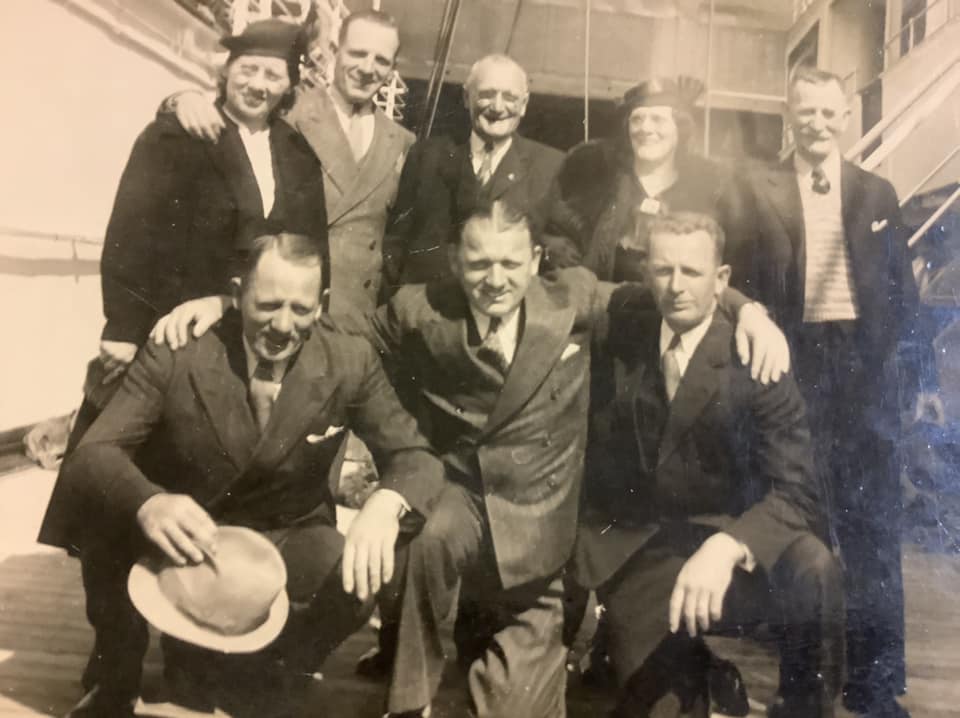
Philip Fitzpatrick was born in Aughavas, County Leitrim, in 1892 and educated locally in Clonsarn. He belonged to a generation shaped by enormous change. Rural Leitrim at the turn of the twentieth century was a county marked by small farms, emigration, strong religious life, and a deeply rooted culture of song and storytelling. Music, poetry and oral tradition were not luxuries — they were part of everyday survival, memory and identity.
Listen to Phil’s sister Nan Fitzpatrick speak about her childhood in Leitrim and the work they had to do.
Leitrim at the Turn of the Century
Fitzpatrick grew up during a period when Leitrim was still recovering from the long shadow of the nineteenth century: land agitation, famine memory, and mass emigration had shaped family life for generations. By the 1910s, young men faced limited economic prospects at home. The revolutionary years around 1916 added political tension to already fragile rural livelihoods. For many, America represented both escape and hope.
Like thousands from Leitrim before him, Fitzpatrick carried his county with him when he emigrated in the early 1920s. Emigration did not erase identity — it intensified it. Irish communities abroad clung to songs, poems and stories as emotional lifelines to home. His writing would later echo that shared immigrant experience.
A Mounted Officer in New York
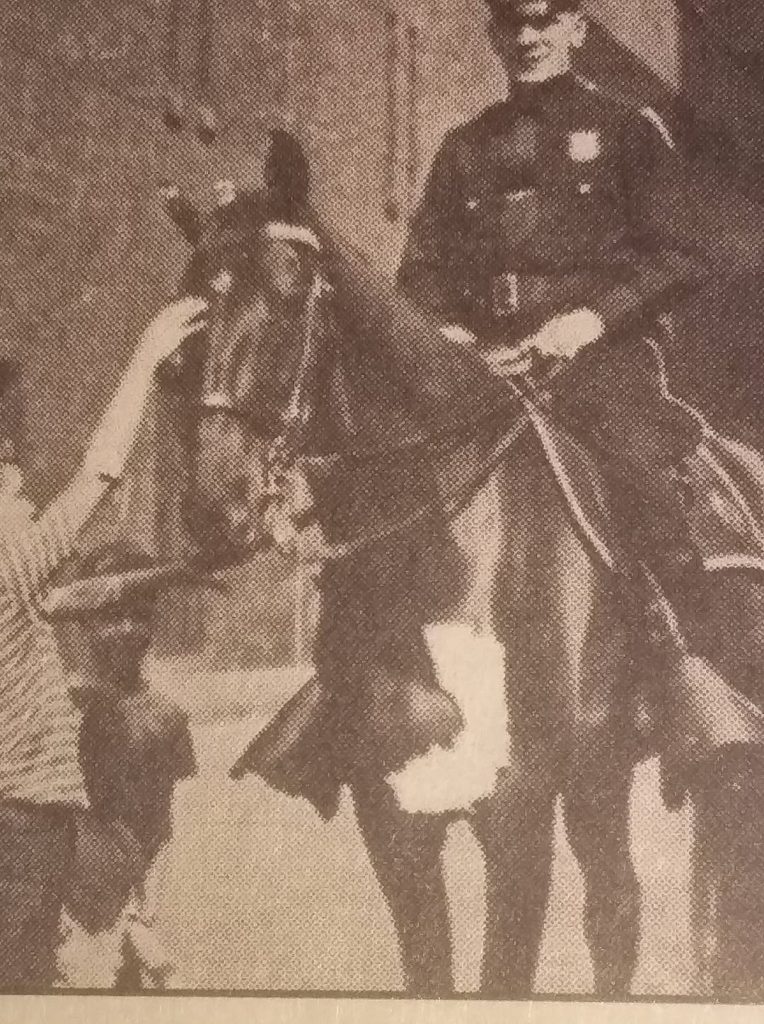
In 1926 Fitzpatrick joined the New York Police Department and was assigned to Mounted Squad 1 in Manhattan. For more than twenty years he patrolled the city on horseback, earning respect for discipline, courage and professionalism. He was one of the many Irish emigrants who built lives of public service in America while still carrying a fierce pride in their origins.
But beneath the uniform lived a poet.
The Poet of Exile
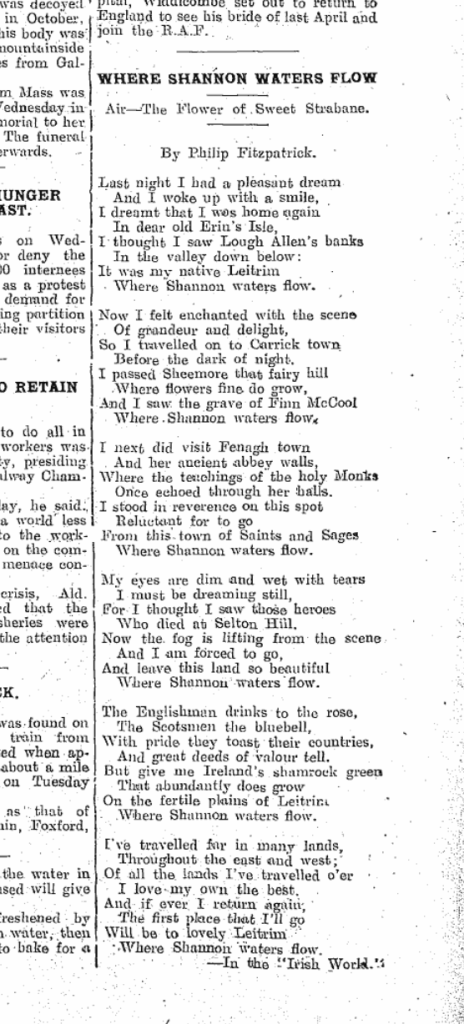
Fitzpatrick came from a family steeped in musical tradition, and poetry was a natural extension of that inheritance. His best-known work, Lovely Leitrim, is written in the voice of an emigrant dreaming of return — a theme that resonated powerfully with Irish communities across the Atlantic;
Last night I had a pleasant dream, I woke up with a smile
I dreamt that I was back again in dear old Erin’s Isle
I thought I saw Lough Allen’s banks in the valleys down below.
It was my Lovely Leitrim, where the Shannon waters flow.
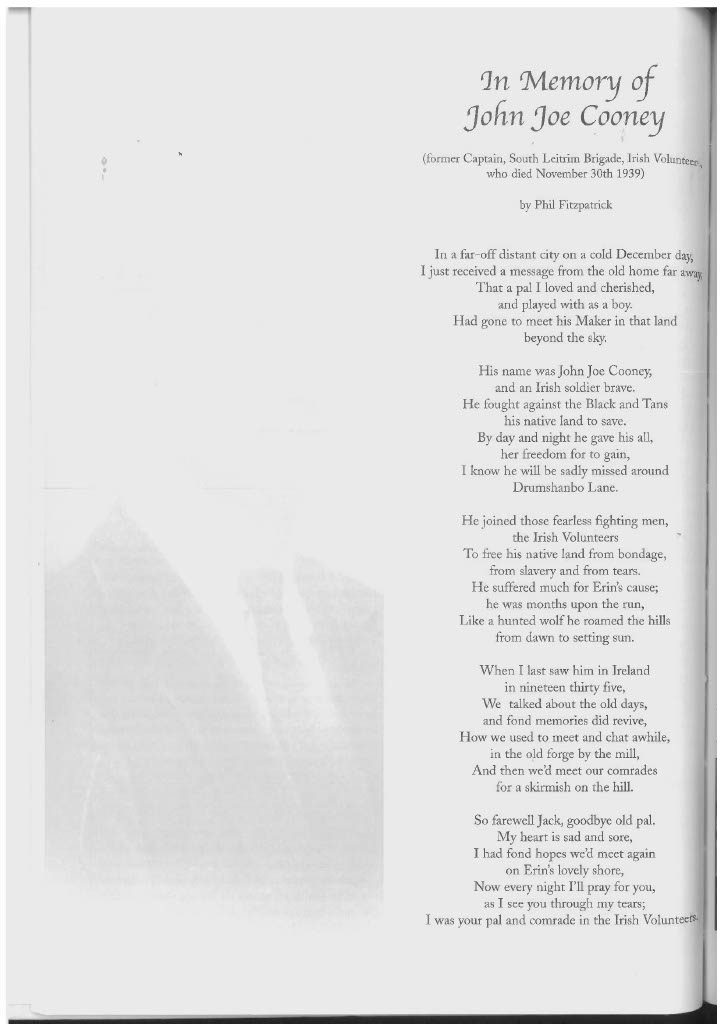
In other poems, Fitzpatrick remembers friends who have passed on, such as John Joe Cooney and his political views on Ireland are made evident.
Fitzpatrick also wrote a poem to honour his fellow police officers in New York, whom he described as “Soldiers of Peace.” In the poem, he describes the fear of many police families that when he “kisses his wife and children goodbye, there’s a chance he will see them no more.”
Those words would later carry a haunting weight.
Courage and Sacrifice
On May 20, 1947, while off duty and eating lunch with
Patrolman George H. Dammeyer on Manhattan’s Upper East Side, Fitzpatrick was confronted by armed criminals attempting a robbery. Without hesitation, he intervened. During the struggle he was shot twice while trying to disarm one attacker. Though his colleague stopped the gunmen, Fitzpatrick’s wounds proved fatal. He died six days later, on May 26, 1947.
Listen here to his sister, Nan Fitzpatrick-Gaffney, speaking about the tragic event.
He left behind his wife Mary and five sons. The NYPD honoured him with a full Inspector’s funeral and awarded him the department’s Medal of Honor. In a gesture of generational continuity, his son Charles — himself a police officer — received his father’s shield number. Fitzpatrick never returned physically to Leitrim, but through poetry he had never left it. He was remembered as a proud Irishman, a devout Catholic, and an active member of the Holy Name Society and the Ancient Order of Hibernians.
The Legacy of Lovely Leitrim
Two decades after his death, Fitzpatrick’s poem found new life in song. Singer Larry Cunningham recorded Lovely Leitrim, turning it into a ballad that spoke to emigrants worldwide. Though initially released modestly, popular demand pushed it to number one, selling over a million copies and becoming an unofficial anthem of County Leitrim.
The song had first been recorded in 1956 by Connie Foley of Tralee, set to the air of The Flower of Sweet Strabane, but Cunningham’s version cemented its place in Irish cultural memory.
For a very comprehensive history of the ballad, Lovely Leitrim, watch Eugene Dunphy’s Ballad History
Remembering Phil Fitzpatrick
Today Fitzpatrick’s name is memorialised at NYPD headquarters in New York. To Leitrim, he remains a poet of longing and belonging; to New York, a police officer who died protecting others. His life bridges two worlds — rural Ireland and immigrant America — united by courage, artistry, and enduring pride in home.
The NYPD motto, “faithful unto death,” could stand as the closing line of his story.
Tributes
Many people have sang and recorded Lovely Leitrim over the years. Most recently, Leitrim based, singer-songwriter, Mick Blake paid tribute to Phil Fitzpatrick in a haunting composition called ” Where The Shannon Waters Flow”