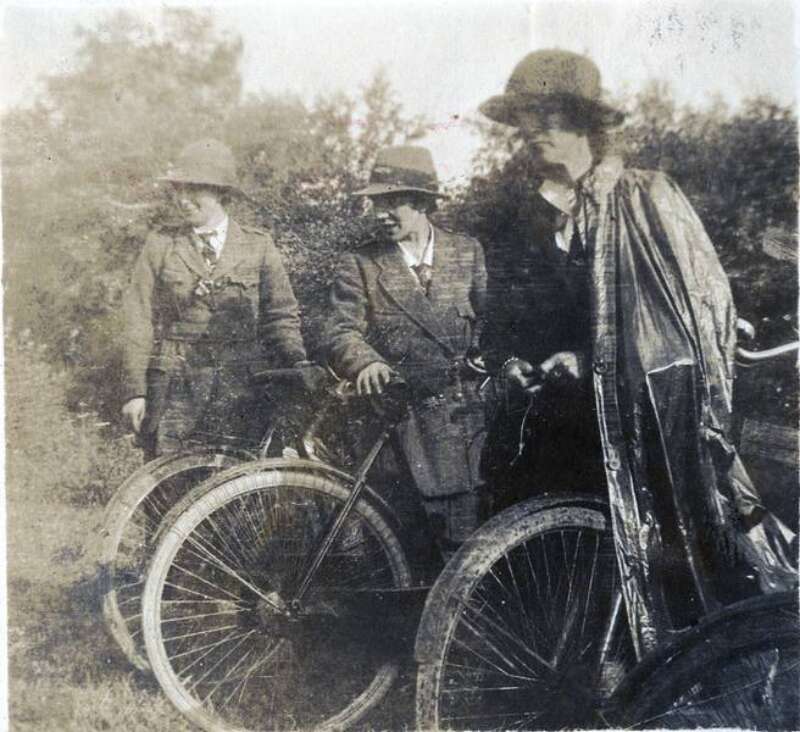
Cumann na mBan, founded in 1914, emerged at a defining moment in Irish history. Created as a women’s organisation aligned with the ideals of national self-determination, it became a vital force in the struggle for independence. Its members were fundraisers, organisers, couriers, nurses, intelligence gatherers, and, when required, active participants in resistance. Though history often placed them in the margins, their work was central, sustained, and quietly heroic.
In Cumann na mBan, women claimed a political voice at a time when such agency was rare. They trained, mobilised, and built networks that reached into towns, villages, and rural communities. Their commitment was not symbolic; it was practical, strategic, and deeply rooted in place.
Across County Leitrim, the spirit of Cumann na mBan was woven into local life. Leitrim women played their part in the turbulent years of revolution and civil conflict — carrying messages along quiet roads, sheltering volunteers, tending to the wounded, and sustaining households under strain. Their stories are found not only in archives and pension records, but also in family memory, folklore, and song.
The Sweeney Sisters
Cumann na mBan in County Leitrim took shape in 1918, with Cloone among the earliest centres of activity, a branch being established there in August of that year. While a full roll of members has not survived, contemporary accounts make clear that participation across the county was considerable.
Kate Healy of Drumhallagh, Cloone, is remembered as the only woman from Leitrim known to have been interned during the War of Independence. In later years she emigrated to the Queens district of New York, where she married Michael Reynolds of Aughavas.
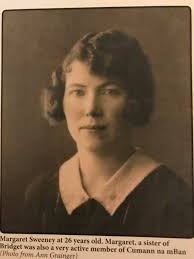
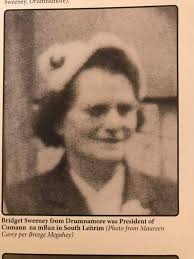
Leadership within South Leitrim included Bridget Sweeney of Drumnamore (later Doherty), who served as President of the South Leitrim Cumann na mBan Brigade. Her sister, Margaret Sweeney (later Brady), was likewise noted for her active involvement.
You can read their statements here – sourced from the Military Archives
The Unseen Army
Inspired by the statements of the Sweeney sisters and the fact that there has been so little documented about the women involved in the struggle for independence in Leitrim, Fionnuala Maxwell composed the following song as part of ‘As It Happened’ – Decade of Centenaries. Supported by Leitrim Library, nine Leitrim artists were commissioned to create work in response to events in the county from 1921.
Filmed in St. James’ Church Dublin, Fionnuala was joined by Brian Ryan & Katerina Speranskaya.
“As It Happened” was produced and filmed by Edwina Guckian and supported by Leitrim County Council & the Department of Tourism, Culture, Arts, Gaeltacht, Sport and Mediaunder the Decade of Centenaries 2012-2023 initiative.
Later, Bridget and Margaret Sweeney’s nephew, Sean Sweeney accompanied Fionnuala on guitar and they re-recorded the song with other musicians, including grand-niece Lorraine Sweeney on flute, Enrien Lamcellari on cello, Paul Gurney on piano, Eileen O’ Brien on fiddle and James Blennerhasset on bass.
Mastered by Tom McElvogue , they performed the song for an Taoiseach Leo Varadkar at a reception in Dublin Castle to mark the end of The Decade of Centenaries Programme.
Remembering Forward
Cumann na mBan was never only about politics; it was about participation, identity, and belief in a future not yet realised. The women who stood within it shaped Ireland not through spectacle, but through persistence.
In revisiting their presence in Leitrim, we honour more than historical contribution — we acknowledge continuity. Their strength, creativity, and conviction remain part of the county’s cultural inheritance.
Their story is not finished. It is still being told.
Her Surrender
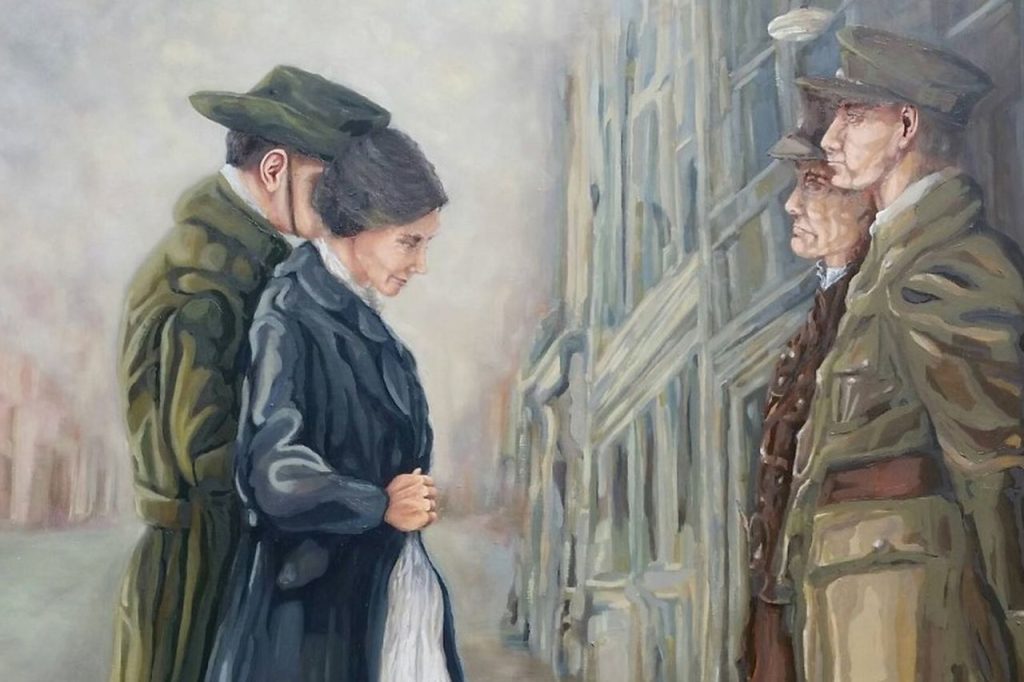
A PAINTING unveiled in the Seanad in 2021 marked International Women’s Day by restoring visibility to a figure long minimised in the historical record.
Elizabeth O’Farrell, a nurse attached to the GPO garrison during the Easter Rising of 1916, accompanied Pádraig Pearse under a flag of truce when he went to surrender to Brigadier General William Lowe and his son John near the lower western corner of Parnell Square.
A well-known photograph of the moment, blurred and grainy, showed only O’Farrell’s shoes and a sliver of her dress, her presence largely concealed behind Pearse. Subsequent reproductions in British newspapers in May 1916 went further, deliberately removing her from the image, creating the false impression that Pearse surrendered alone.
The painting, titled Her Surrender by Leitrim artist Sinéad Guckian, presents an imagined perspective from the opposite side, depicting O’Farrell fully and Pearse partly obscured. The work was generously donated to the Oireachtas and unveiled by Seanad Leader Regina Doherty, who spoke of her pride in the occasion and the intention to place the painting prominently within Leinster House.