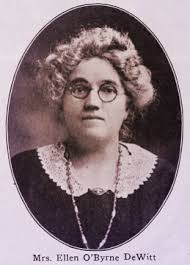
Ellen O’ Byrne De Witt – Founder of Irish Recording Industry in America
on in
“O’Byrne-DeWitt seemed to embody the values of both old Ireland and modern America. She was socially modest and financially successful, and she applied her enterprise skills and vision to capture and preserve a version of Irish culture. Her achievements ensured that Irish music was taken seriously in the early 1900s. Importantly for Ireland, the entrepreneurial activities of Byrne-DeWitt proved that small companies could find a niche in the global recording music industry.”
And the amazing thing about this woman is that she was born in Leitrim – in Dromod. It is reported that she left Leitrim at the age of 15 and in time, earned the title ‘the founding mother of the Irish record industry.’
After extensive research, traipsing through births, deaths and marriages records, census, Irish and American newspapers, we now have a fuller picture of who Ellen O’ Byrne actually was.
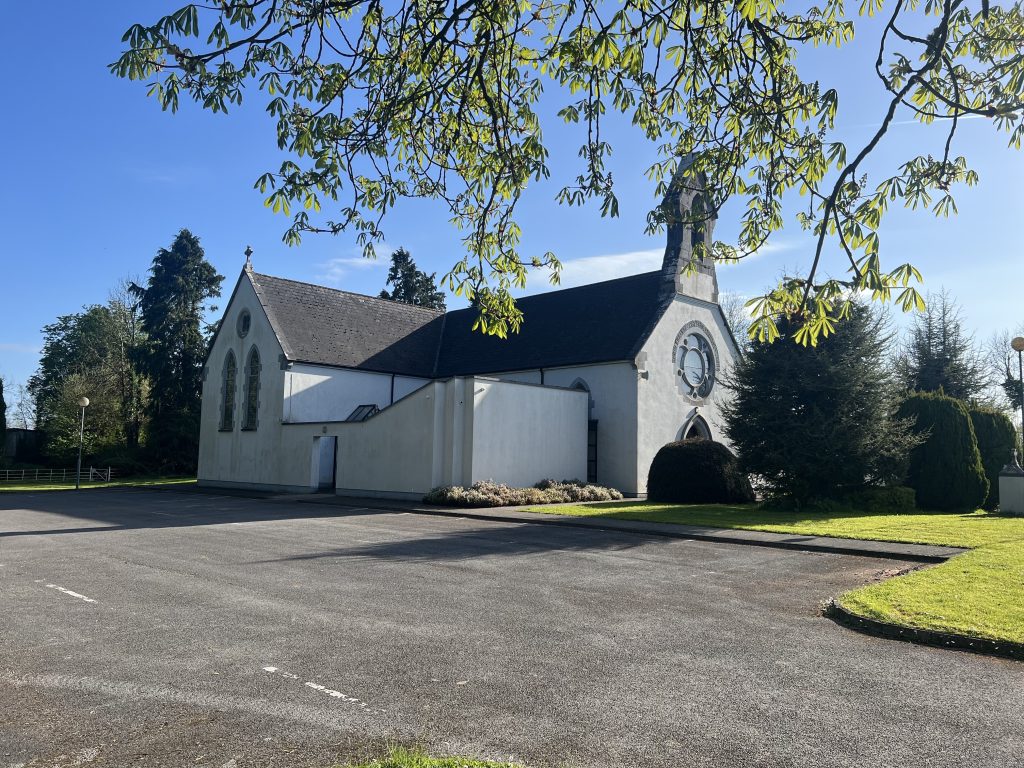
St. Michael's R.C. Church, Bornacoola
Ellen Beirne was baptised in Bornacoola R.C. Church on May 6th 1883. Her parents, James and Margaret Beirne (nee Beirne) had married in the same church on August 28th 1854 and the family lived in Cloontumpher, not far from the church in Bornacoola.
Ellen was 4th born in a family of seven (seven that we found record of), she had an older sister, Mary and two younger sisters Margaret and Rose. Her brothers included John, Francis and Patrick.
It is not very clear when exactly Ellen left for America, although some newspaper reports claim that she left at 15 or 16 years of age and came to the USA with nothing only her thriftiness and a keen business sense.
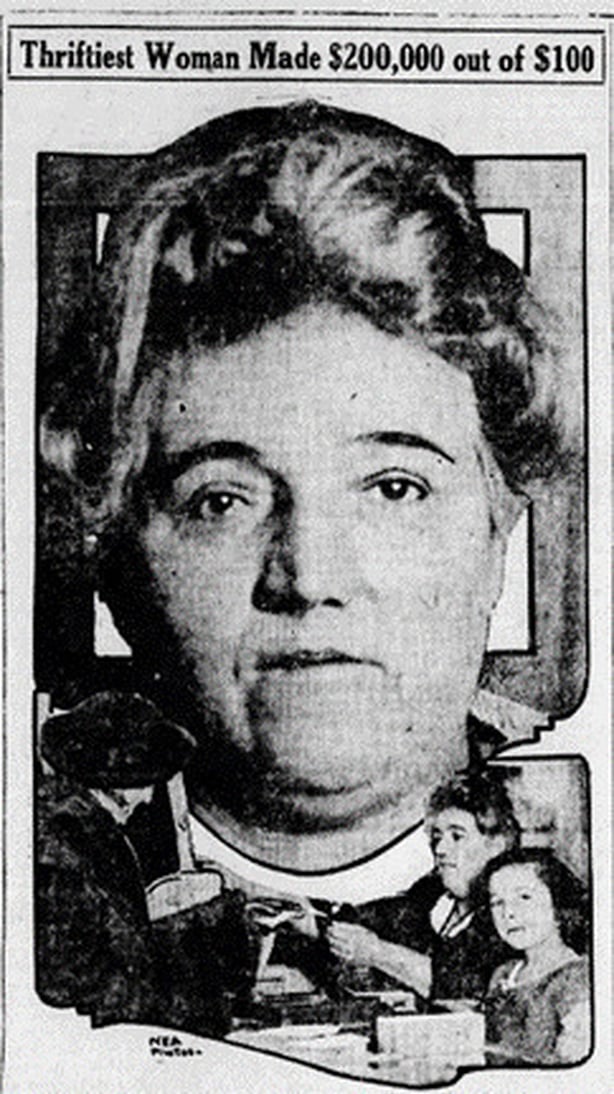
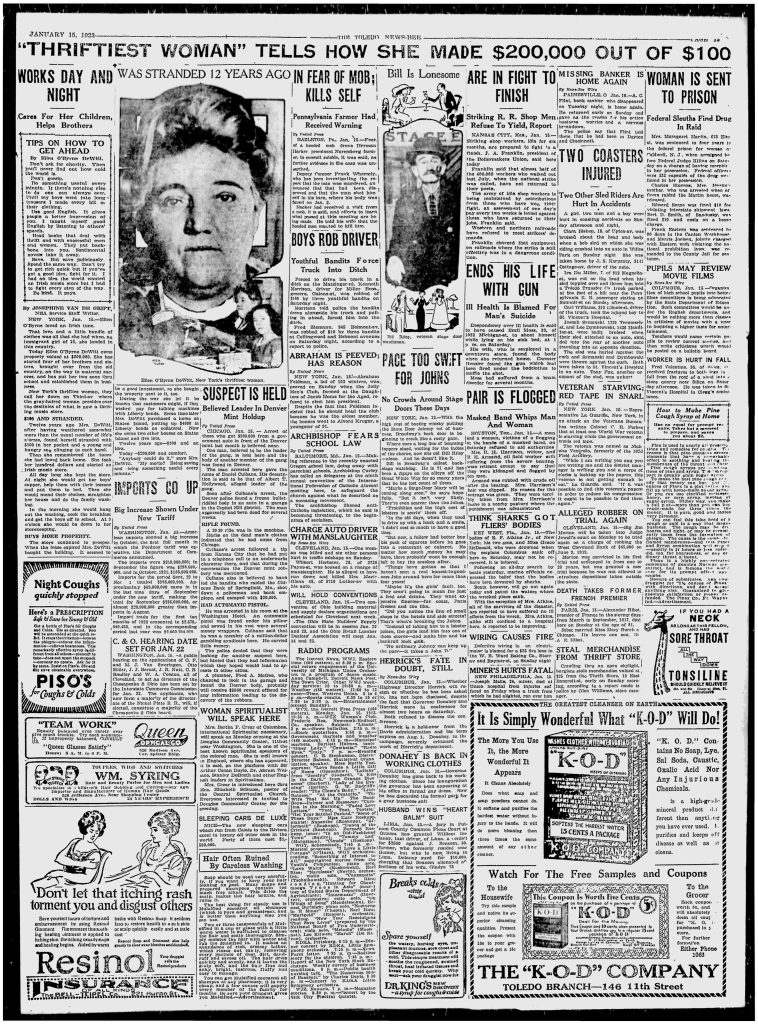
From The Toledo News 15th January 1923
This feature piece ran in many American newspapers at the same time in 1923. It claims that Ellen O’ Byrne DeWitt “loved an Irish tune” and “that love and a little bundle of clothes was all that she had when, an immigrant girl of 16, she landed in this country”. It goes on to describe her rise in fortune, born from her love of Irish music and her observation that many Irish immigrants missed the sounds of home;
“She took her hundred dollars and started an Irish music store….the store continued to prosper. When the lease expired Mrs DeWitt bought the building”
Further success follows when Ellen buys property on Staten Island and then has a fortune of $200,000.
The “rags to riches” story is remarkable but perhaps embellished a little as a very clever marketing ploy. However, there are a number of elements to the story that are truly remarkable – the fact that Ellen O’Byrne, as a woman in a very male-dominated society at the time, had her name on a store on 3rd Avenue, her persistence and entrepreneurial skills when it came to marketing Irish music and how she has managed to stay under the radar as a hugely influential Leitrim woman, for so many years.
Ellen’s Marriage to Justus DeWitt
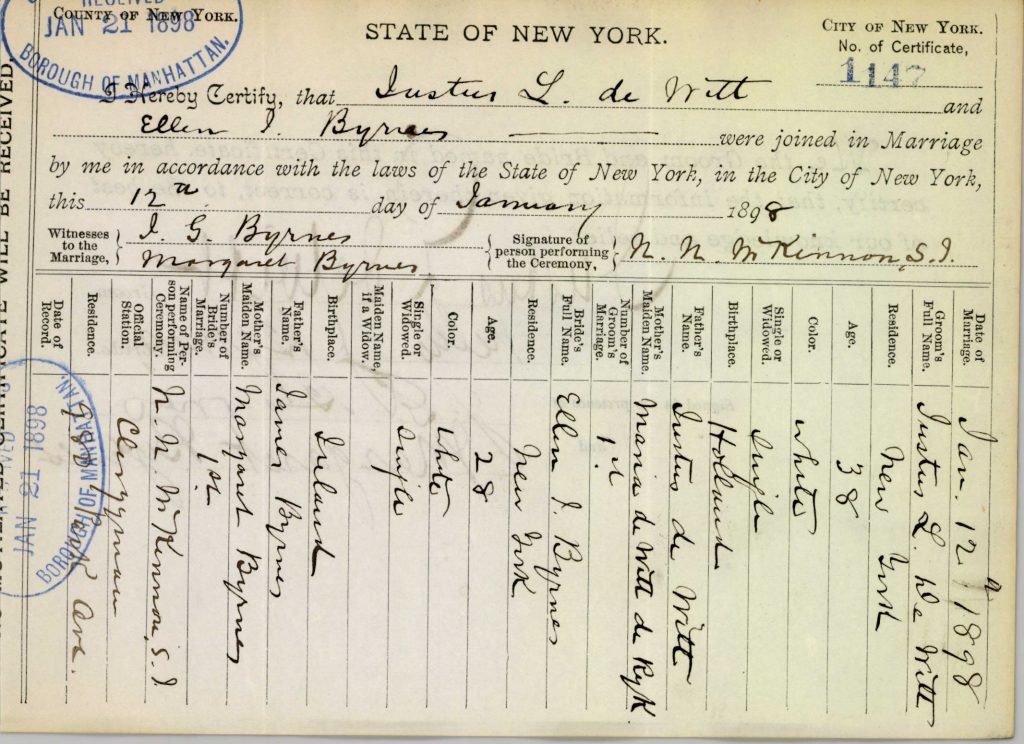
Ellen married Justus, who was a dutch emigrant, in NewYork on January 12th 1898.
She is now “Byrnes” rather than Beirne or O’ Byrne – a common occurrence when it came to Irish names and emigration. She also claims to be 28 years old whereas her date of baptism would actually leave her closer to 34. Her witnesses are also two “Byrnes” who we assume are relatives (she did have a brother John and a sister Margaret)
Census records also added to the mystery or the “confusion” surrounding this canny lady.
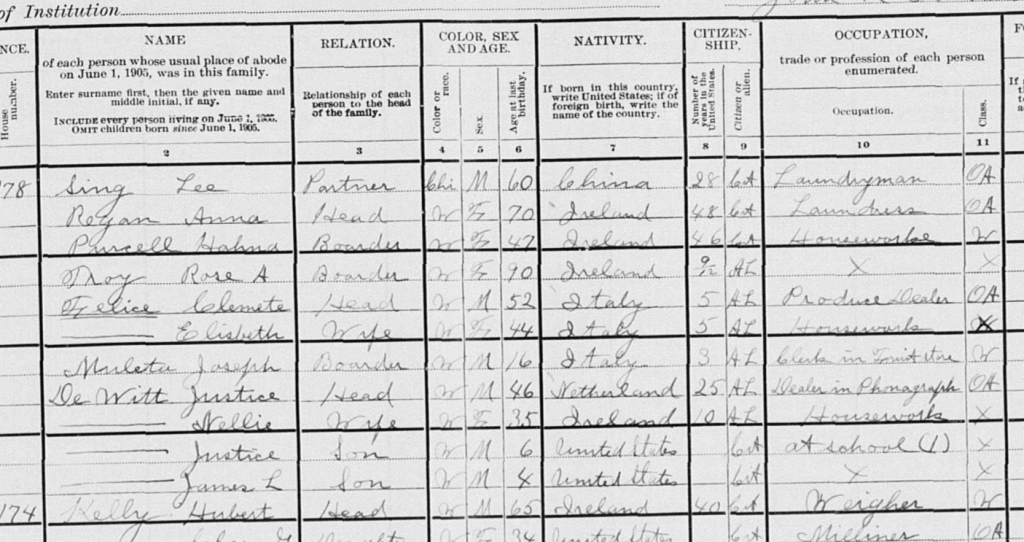
In the following 1905 census, Ellen or “Nellie” has listed “housework” as her occupation whilst “Justice”, her husband is listed as a “dealer in phonograph” and they have two sons, James and Justice who are 6 and 4 years old. It is unusual that the seemingly strong-willed Ellen would not have been listed as a shop or store owner.
Even in the 1920 census, Ellen is listed as having no job whilst her husband and son, both named Justus are phonographers. This is the first time we see mention of their daughter, “Margarite” although it is hard to work out what her relationship is to them on this census return – maid or ward? She was, however, later mentioned in Ellen’s death notice.
The family are also still living in 3rd Ave despite the claim to having a home and other property in Staten Island.
How can we be sure we have the right Ellen Beirne?
Despite discrepancies in age and the fact that the “Beirne” surname is such a popular one, there are a number of pieces of evidence that make it certain that Ellen O’ Byrne DeWitt was the Ellen Beirne who was born in Cloontumpher in 1863.
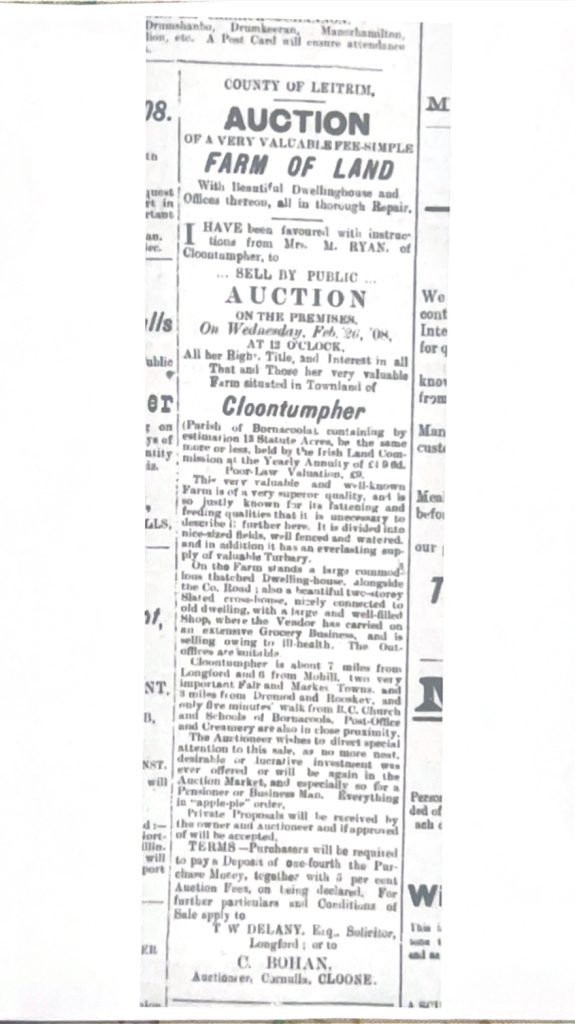
Her sister, Margaret, who lived with her husband in Cloontumpher from her marriage in 1904 until she died in 1912, despite coming from a poor farming background, had the money to set up a grocery shop in Cloontumpher and we also know that a new “slated house” had been built beside the old thatched residence.
Margaret’s mother (also Ellen’s) lived with Margaret and her husband, Cornelius Ryan up until her death.
Reports from a series of court cases appear in local newspapers detailing how Margaret’s sisters – Mary Farrell and Rose Lennon/Lannon were not happy with that arrangement. During exchanges, their mother claims that each child was given a fortune after her husband (their father) died and that she had a son in the “police”
So they were all doing quite well for themselves compared to many others around them, which suggests that Ellen either sent them money from America or set some of the others up.
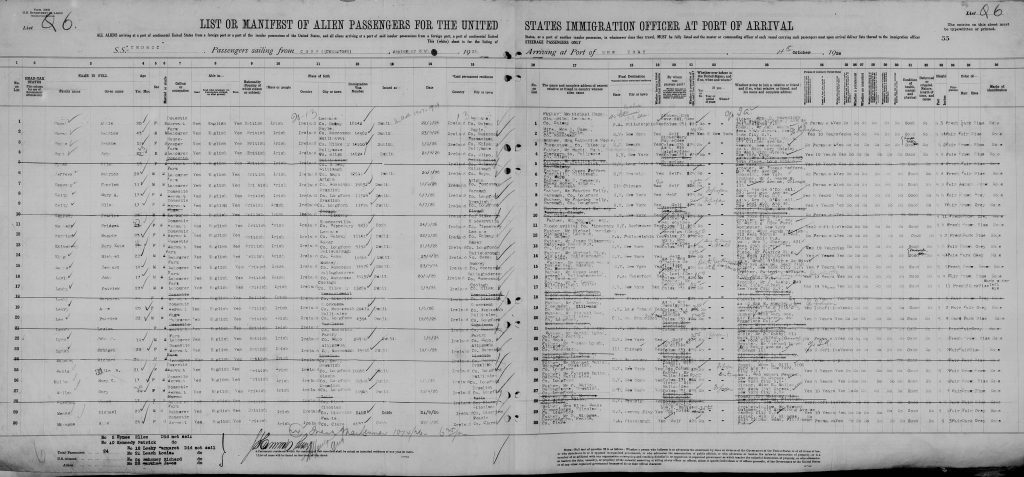
In later years, we see Bernard Lannon, Rose’s son emigrating to the USA and listing his Aunt, Ellen O Byrne DeWitt as his sponsor.
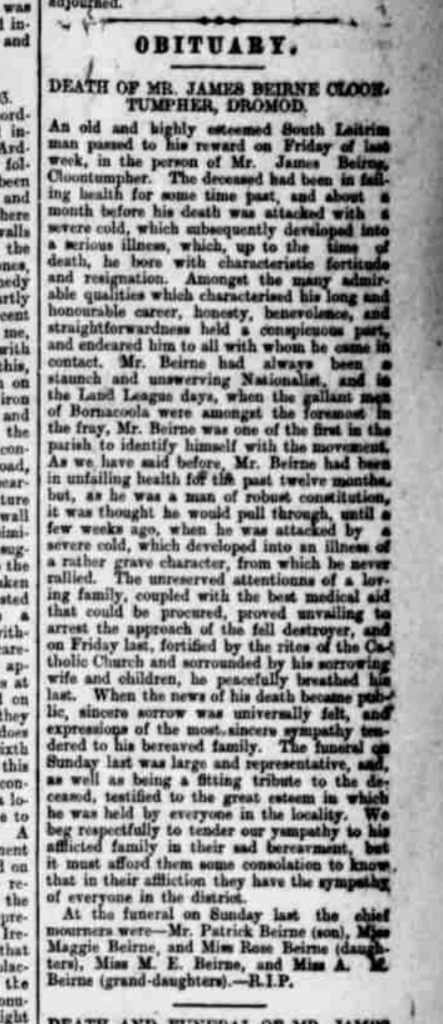
When Ellen’s father, James, died in 1903, he was lauded in the Roscommon Herald as being a “staunch and unswerving Nationalist” which might explain, Ellen’s choice of name for her store in 3rd Avenue.
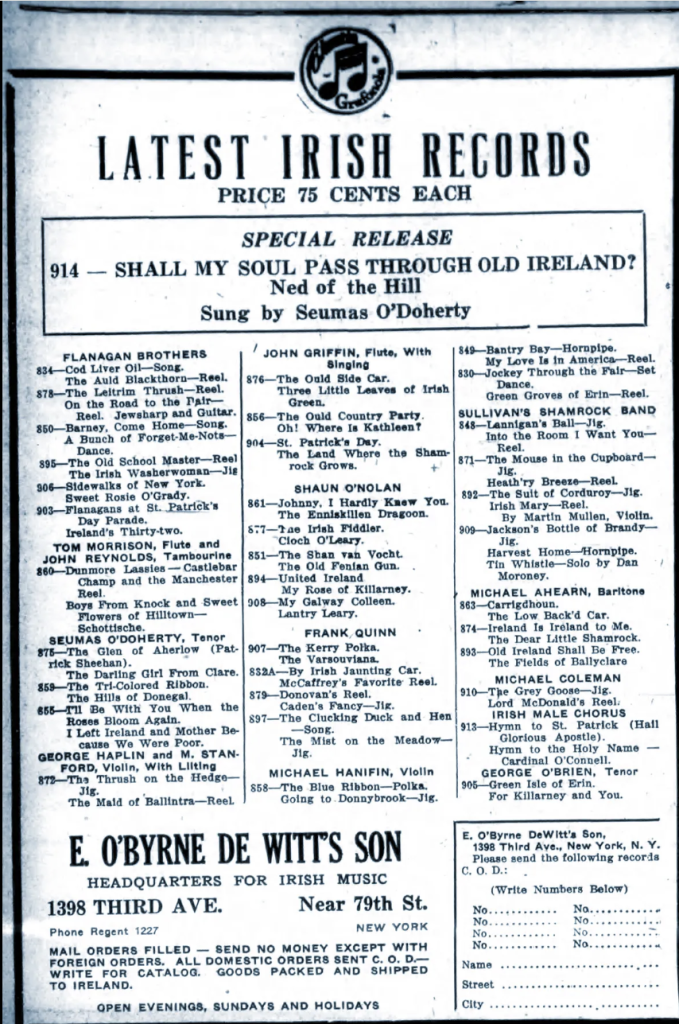
Newspaper ad for Ellen O'Byrne Dewitt's Irish Music Shop, 1919. Photo: New York Irish History Roundtable
O’ Byrne Dewitt Store
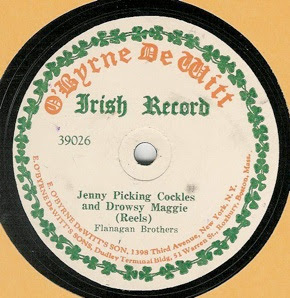
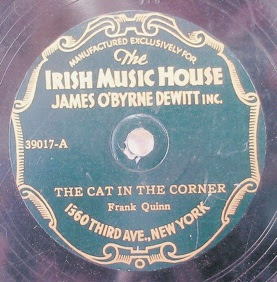
O’ Byrne’s shop which was in 3rd Avenue, New York was one of the first shops in New York selling Irish goods exclusively. This of course meant that emigrants were drawn to it and O’ Byrne knew what her customers wanted – Irish music! The major labels weren’t interested in recording Irish artists so she found Irish musicians herself to play tunes and she arranged for them to be recorded and the records to be distributed.
“Irish people were always coming in and asking for old favorites like “The Stack of Barley.” Well, she’d no records to give them because there weren’t any. So she sent me up to Gaelic Park in the Bronx to find some musicians. There was always music there on Sundays. Well, I found Eddie Herborn and John [James] Wheeler playing banjo and accordion, and they sounded great. So my mother went to Columbia, and they said that if she would agree to buy five hundred copies from them they would record Herborn and Wheeler. She agreed, and they both recorded “The Stack of Barley,” and the five hundred records sold out in no time at all”
(From an interview that Mick Moloney recorded with Ellen’s son, Justus O’Byrne DeWitt.)
Listen to that recording of The Rocky Road to Dublin and The Stack of Barley.
Label of Love
And now take a listen to episode one of RTE’s “Label of Love” in which Cathal Funge takes a trip back to the dawn of the recording age to trace Ellen O’ Byrne De Witt’s extraordinary story.
From an article written by Méabh Ni Fhuartháin as part of a master thesis, we learn a lot more about Ellen O’ Byrne DeWitt and the musical legacy of the O’Byrne DeWitt family.
After Ellen’s death in 1926, her second son, James, inherited the New York store, and the eldest son, Justus Jr., moved to Boston to open his own enterprise under the O’Byrne Dewitt name. The O’Byrne DeWitt business flourished in Boston as it had done in New York.