Come All Ye Gallant Sportsmen
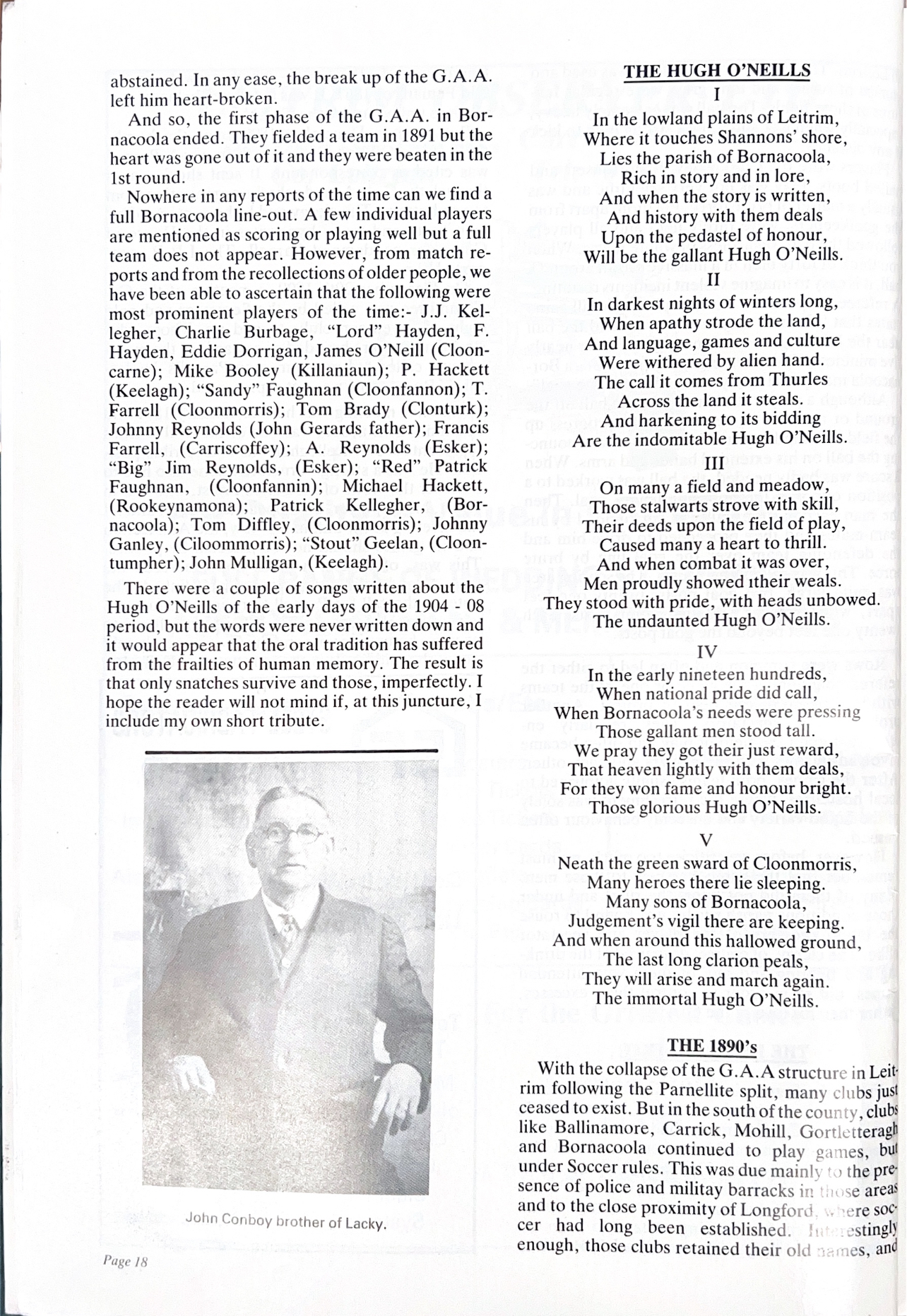
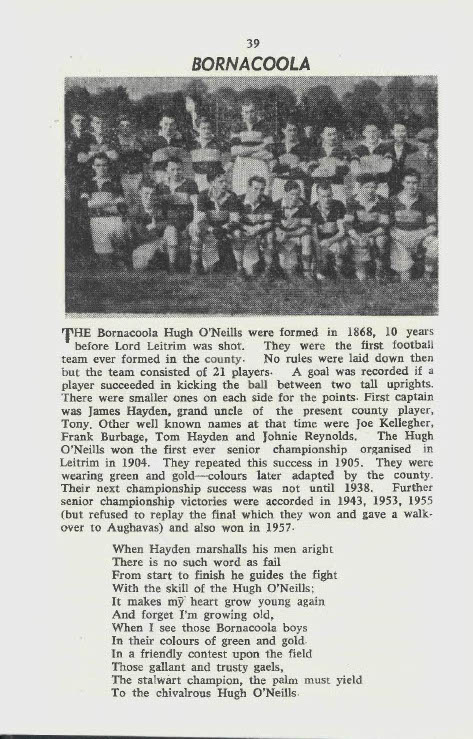
“Come raise three cheers for the Hugh O Neills
That brave and gallant band.
And double three for the captain bold
Who holds them in command.
Of all the Irish Gaelic boys
Of stalwart limb and frame
The Bornacoola slashing team
Has earned the greatest name.”
There’s nothing like a sporting victory to incite singing or inspire a song! If you’ve seen footage of the late Galway hurler, Joe McDonagh’s spontaneous rendition of “The West’s Awake” after his team claimed the All-Ireland title in 1980, you will know what I am talking about. The above verses sing the praises of the Bornacoola “Hugh O’ Neills” which was reportedly the first Gaelic football team formed in the county in 1868 and winners of the first ever official Leitrim Senior championship which took place in 1904. Not only does the song immortalise the men who played on the team (a team of 21 played on the field in the early stages!), it also gives us an insight into the history and politics of the game and indeed a broader picture of the cultural landscape of the county.
Politics
The Kiltubrid Davitts, Eslin Sarsfields, Ballinamore William O’ Briens, Carrick Emmets, Annaduff Parnellites, Cloone Sons of O’ Connell…the political message was clear! And just as these historical and patriotic figures roused many men to action, so too did the verses of the various footballing anthems. From the war-cries (think Mohill’s Fág a’ Bealach) to the taunting of the opposition.
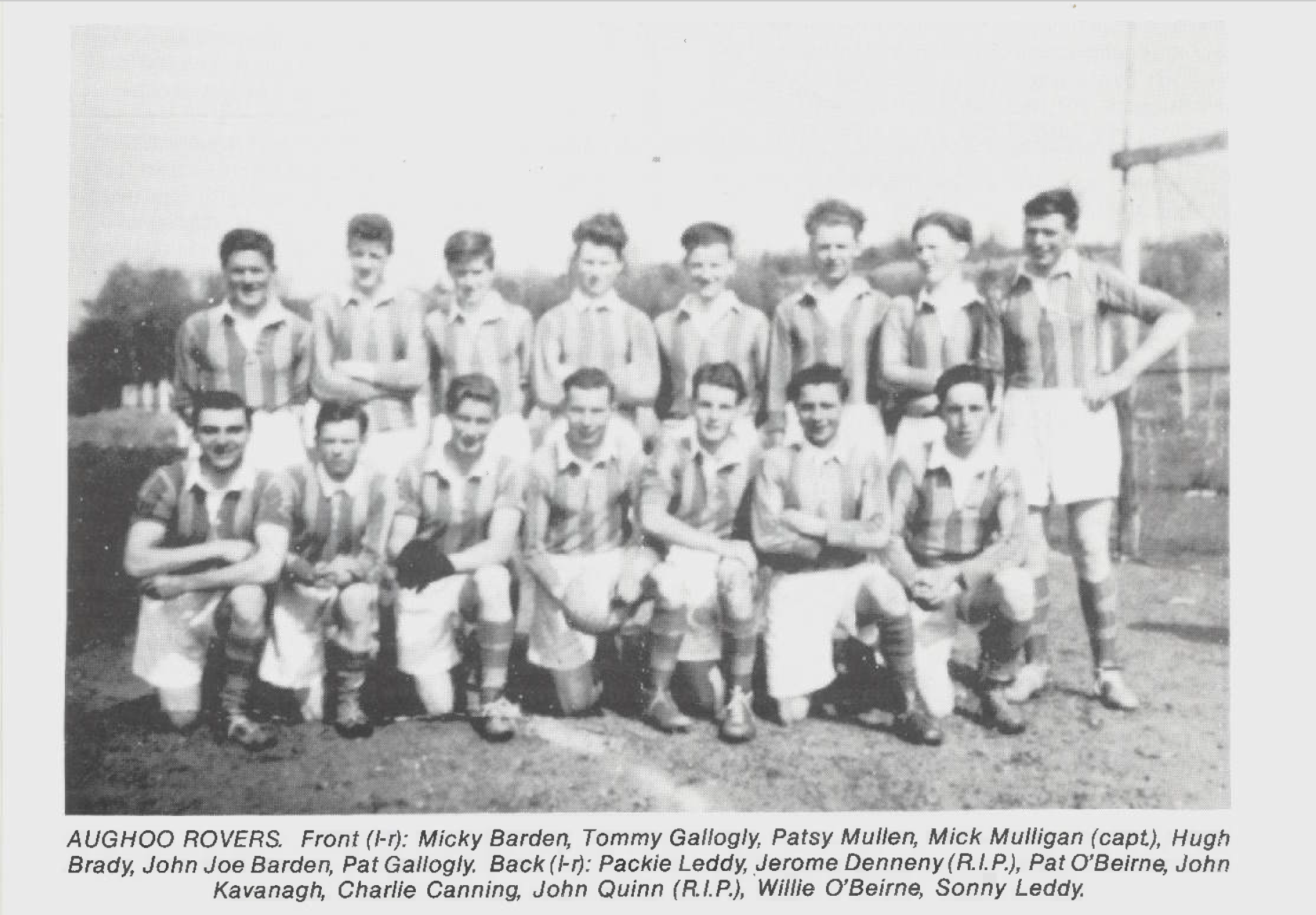
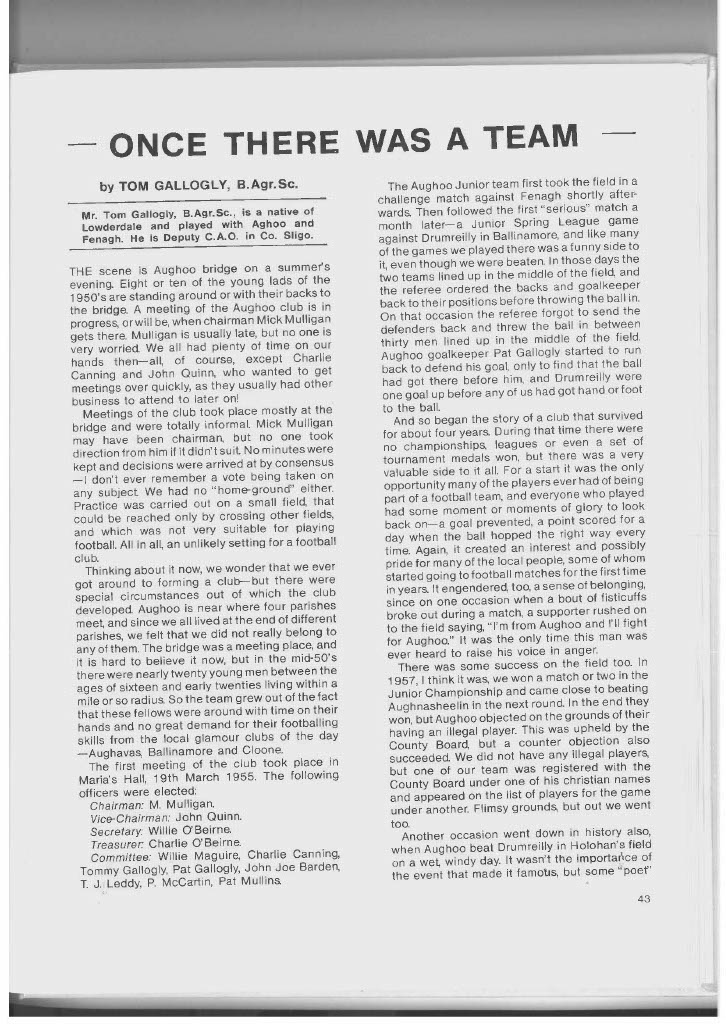
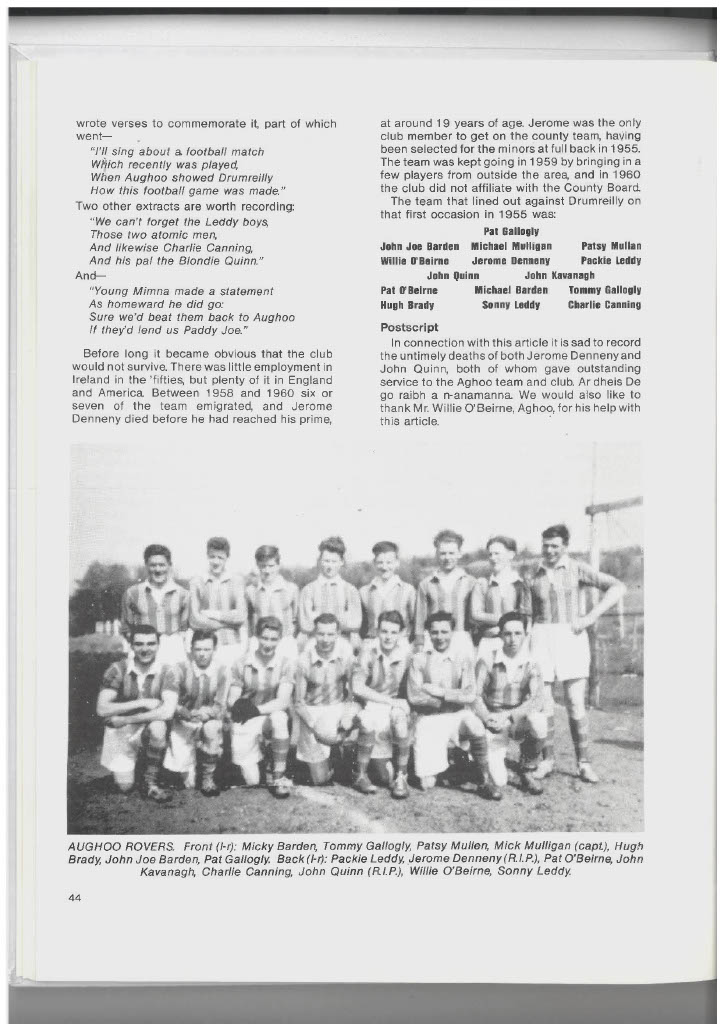
Pauric Sweeney sings “The Aughoo Rovers”
Ballinamore’s Pauric Sweeney recently resurrected this song as part of The Leitrim Larks Project, which he had heard in his childhood and managed to write down the lyrics as the last surviving member of the team, Pat Gallogly, recited them to him from memory. A testament to the value and sentiment that this song held for the people involved. Pat, who was goalkeeper for the team, passed away recently, but he and his teammates will be forever alive in the words of the song.
Retaliation
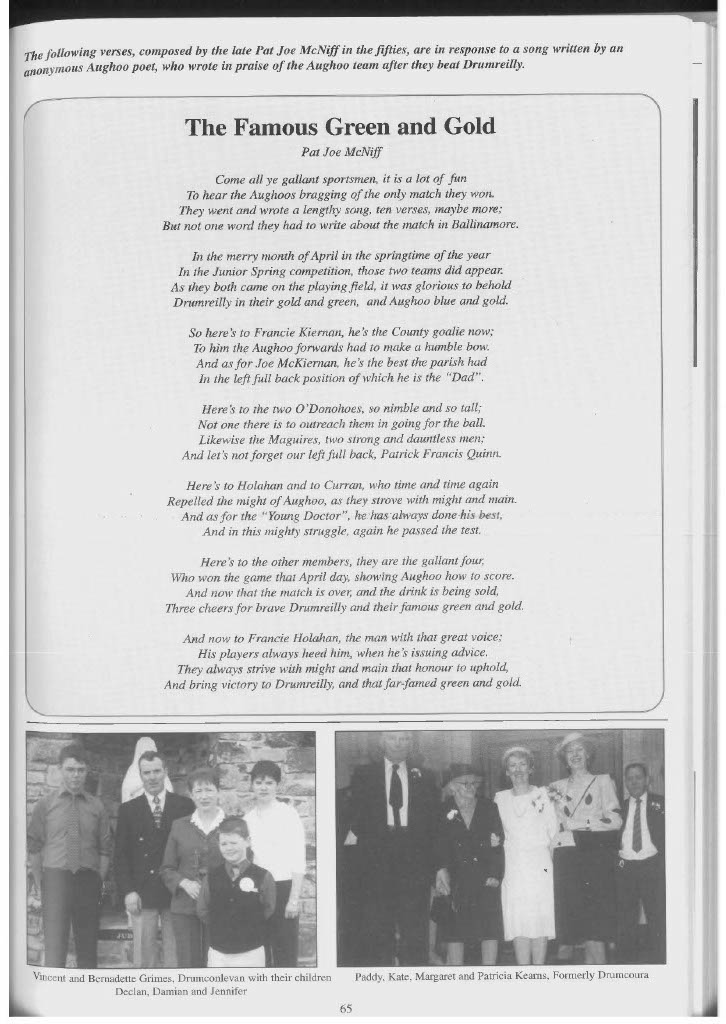
But Drumreilly quickly retaliated – again in the form of verse, when the poet Pat Joe McNiff saw his chance shortly after, when Drumreilly emerged victorious over the Aughoos at a match in Ballinamore,
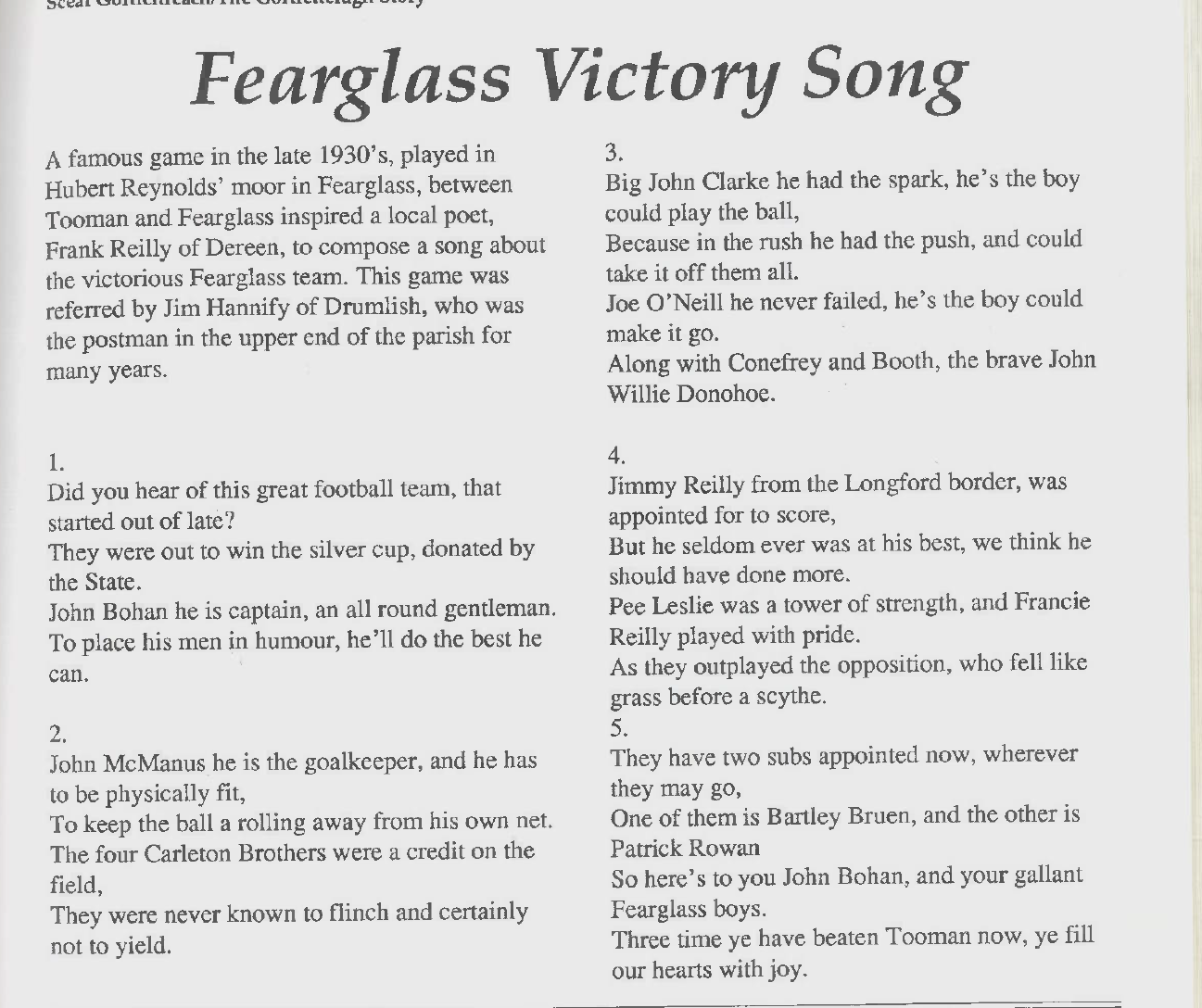
One very important element of these ballads was the mention of the men’s names, their skills and prowess – and sometimes we got further information about their professions, their size or physical appearances.
Gortletteragh GAA story three songs (1)
Songs for the Annaduff football teams written by Francis J. Cox.
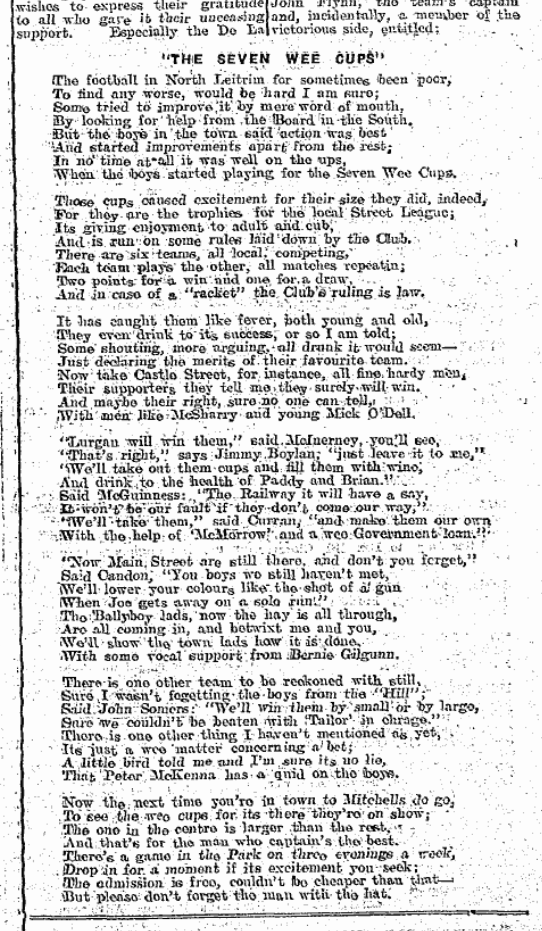
The Seven Wee Cups
And then to verses from North Leitrim that start out in a very negative fashion;
“The football in North Leitrim for sometimes been poor
To find any worse, would be hard I am sure;
Some tried to improve it by mere word of mouth,
By looking for help from the Board in the South.
But the boys in the town said action was best
And started improvements apart from the rest;
In no time at all, it was well on the ups,
When the boys started playing for the Seven Wee Cups.”
The Manorhamilton Sean McDermott’s Club organised a 7-aside football tournament in 1954. According to a report from The Leitrim Observer at the time;
“The Cluainín Uí Ruairc Street League, run by Sean McDermott Gaelic Football Club, concluded when, on Friday, Sept.2, Boley Hill were victorious over Main Street, before an attendance which exceeds that of any ordinary competitive game at the same venue to date.
Boley Hill were only defeated throughout the competition once, by Lurganboy, and a Main Street seven, over-enthused by the occasion, never displayed the form which brought them to the Final, and so the “Hill” had a comfortable passage.”
The teams that participated represented Main Street, McDermott Terrace (Boley Hill), the Railway, Castle Street, Lurganboy and Ballyboy and brother could have been pitted against brother. The main objective of the tournament, it seems, was extra training for the Manor boys whose focus was on defeating the Melvin Gaels team at their next meeting. According to the same newspaper report, now that the games were over, the only pastime left for the participants was to render the “Street League Ballad” as written by local postman Sean Flynn, who was a footballer from Cornaneane, Mullies and a member of the winning team.
Leitrim G.A.A. – a Brief History
“The first G.A.A. Clubs in Leitrim were founded in Dromahair and Killanumery in early 1886. The first Championship was run in 1890 with Mohill beating Ballinamore in the final. The G.A.A. died in Leitrim in 1891 with the Parnell split and it didn’t revive again until 1904. Since then the Organisation has gone from strength to strength despite the awful depopulation of the County.”
https://www.leitrimgaa.ie/history/
Connacht Senior Titles
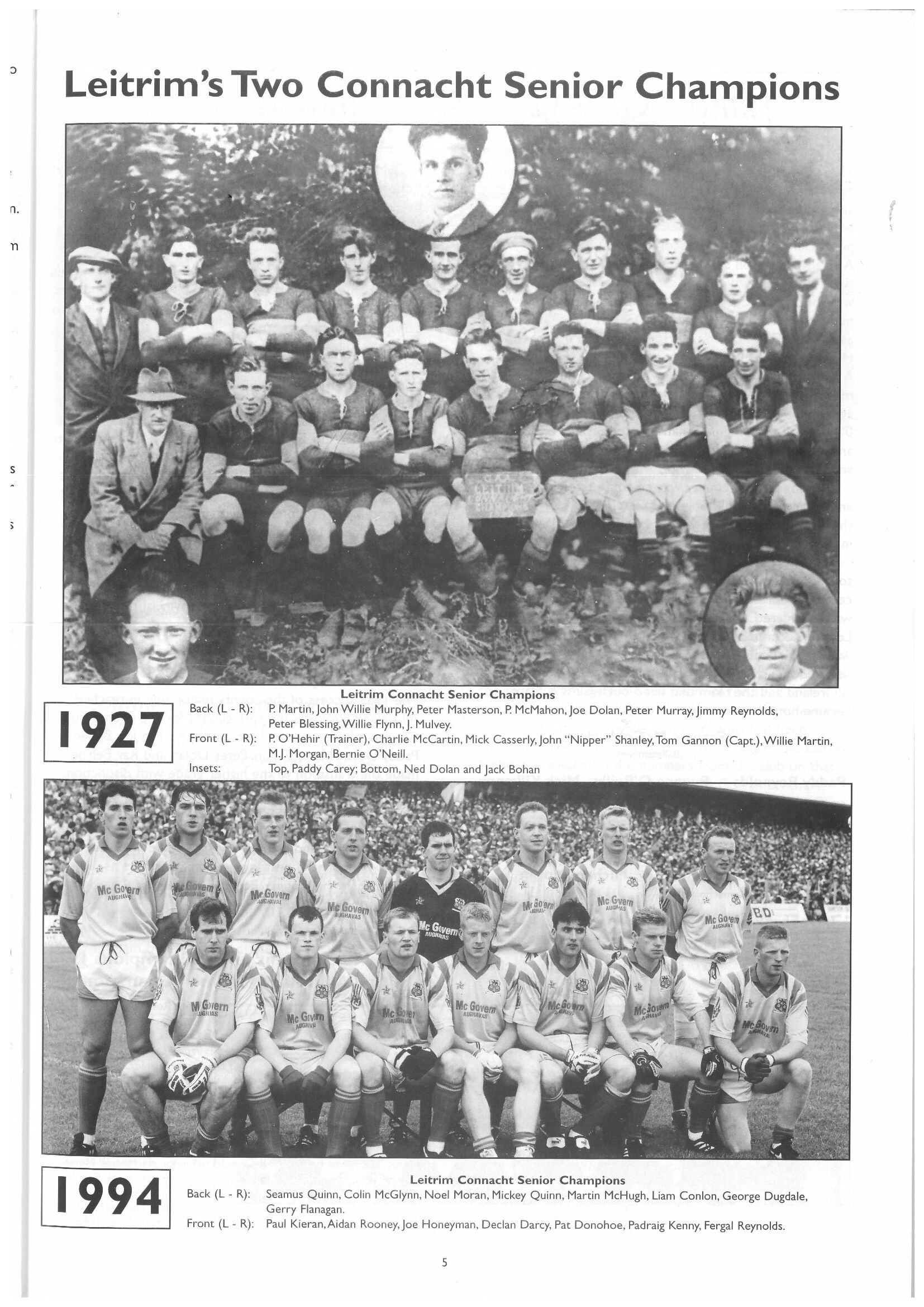
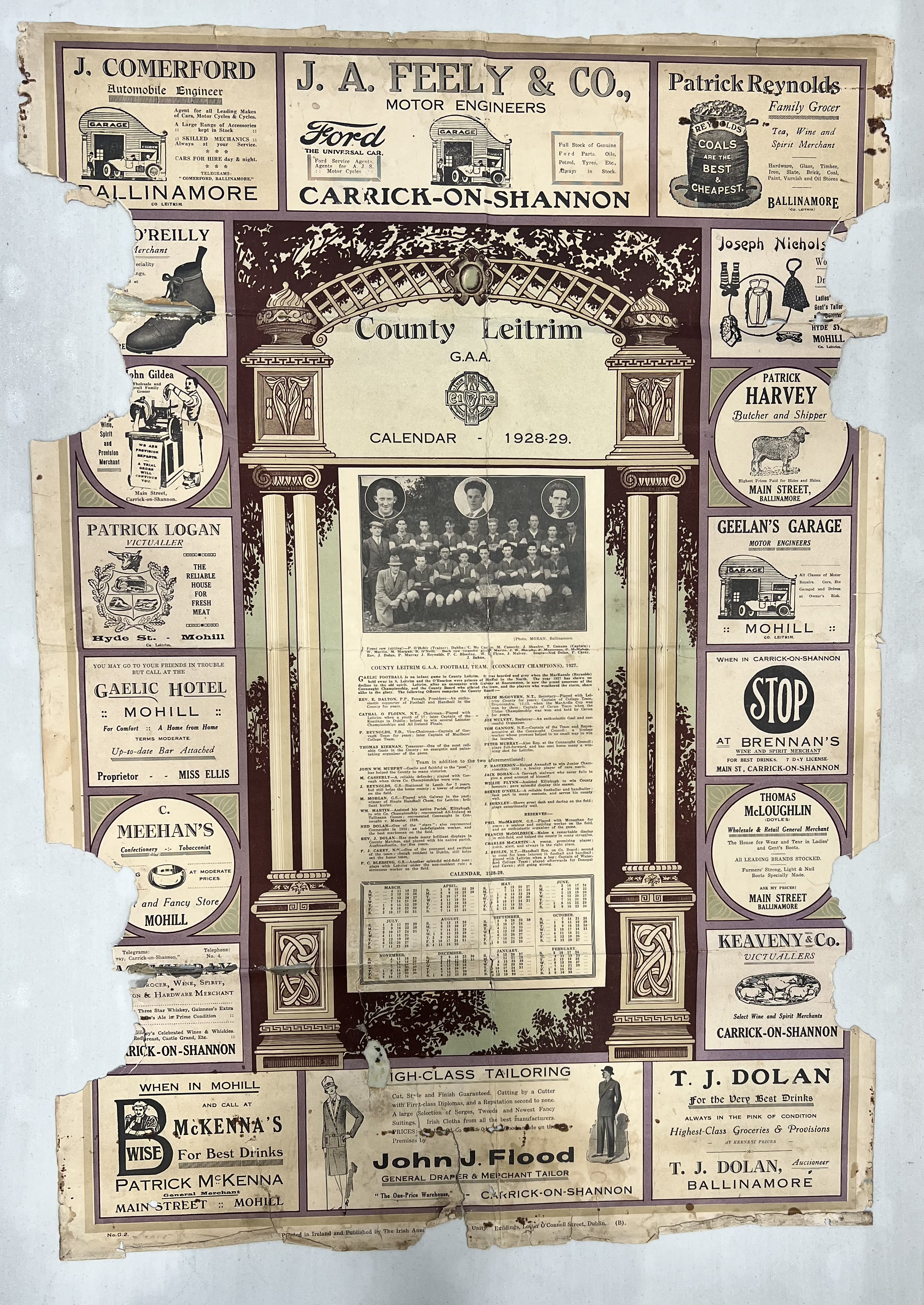
1927 and 1994 were two big years for Leitrim G.A.A. – the years that saw them winning the Connacht Senior Championship.
County Songs
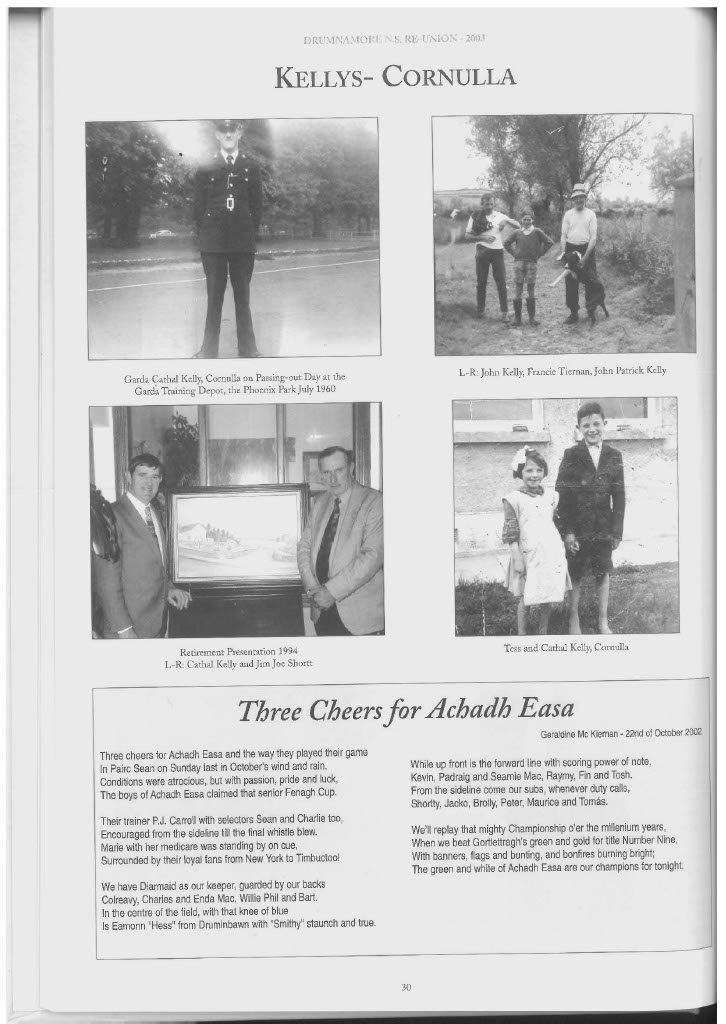
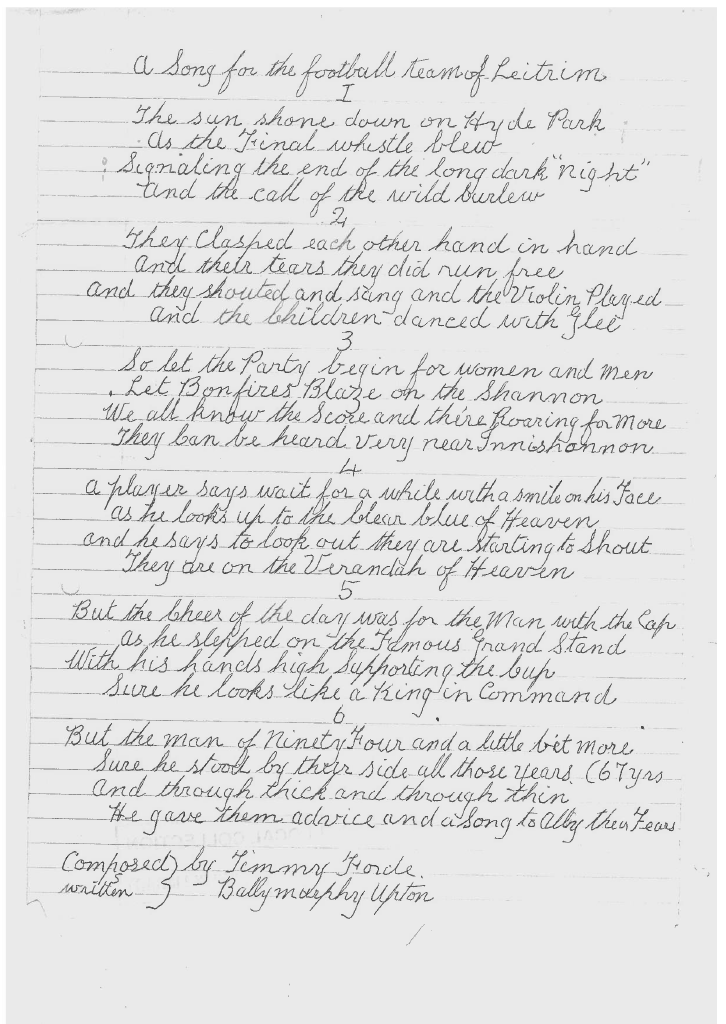
And there were songs written for and about county teams over the years also.
G.A.A. and Music
Of course the G.A.A. played a further role when it came to promoting traditional music. Many of the early matches were preceded by bands of some sort – usually a fife and drum band, of which there were once many. Nowadays, unless you are lucky to have the Kiltubrid Pipe Band on board, you will more than likely be listening to piped music of some sort over the speakers.
Another important promotional and preservational effort made by the G.A.A. is of course through its Scór competitions which cater for many different traditional art forms.
Here you can catch a little bit of culture in an RTE archived programme which showcases London GAA’s preparations for playing Leitrim in 1997.
https://www.rte.ie/archives/2015/0522/702937-gaa-london-prepare-to-meet-leitrim/